A Weeknight Kitchen Setup That Makes Cooking Feel Easier
Weeknight cooking often feels harder than the recipe itself. The real drag is usually the sequence around it: finding a clear patch of counter, hunting for a pan, opening three cupboards for ingredients, and then discovering that the sink is already full. A small amount of preparation can turn that scattered start into a calmer routine.
The idea is not to create a professional kitchen or buy a collection of organizers. It is to make the space you already have support the order in which you actually cook. When the most common tools and ingredients are easy to reach, dinner becomes a chain of small, obvious steps instead of a series of interruptions.
Begin with one clear working zone
Choose the section of counter where most chopping, mixing, and assembling happens. Before cooking, clear that area completely except for the cutting board and the few items needed for the first stage of the meal. A clear surface makes it easier to see what is happening and gives bowls, peelings, packages, and utensils somewhere predictable to go.
If counter space is limited, treat the stove or sink area as part of the sequence rather than as permanent storage. A pan can stay on the hob because it will be used soon; a colander can wait in the empty sink. The aim is to avoid keeping unrelated objects in the active zone while the meal is being made.
Group the things you reach for every evening
Most home cooks use a surprisingly small set of items again and again: oil, salt, pepper, a wooden spoon, a chef’s knife, perhaps a favorite small pan. Keeping those together reduces the number of movements between cupboards and drawers. A tray, shallow basket, or single shelf can work well because the whole group can be moved when the surface needs cleaning.
The same principle applies inside drawers. Frequently used tools deserve the easiest positions, while specialty gadgets can live farther back. If a drawer is crowded, removing two rarely used pieces can be more helpful than adding another divider.
Set up ingredients in the order they are used
Rather than placing every ingredient on the counter at once, arrange them in simple stages. Put vegetables and chopping ingredients nearest the board, cooking fats and seasonings near the stove, and finishing items such as herbs or cheese slightly farther away. This creates a loose visual map of the recipe without requiring formal preparation bowls for everything.
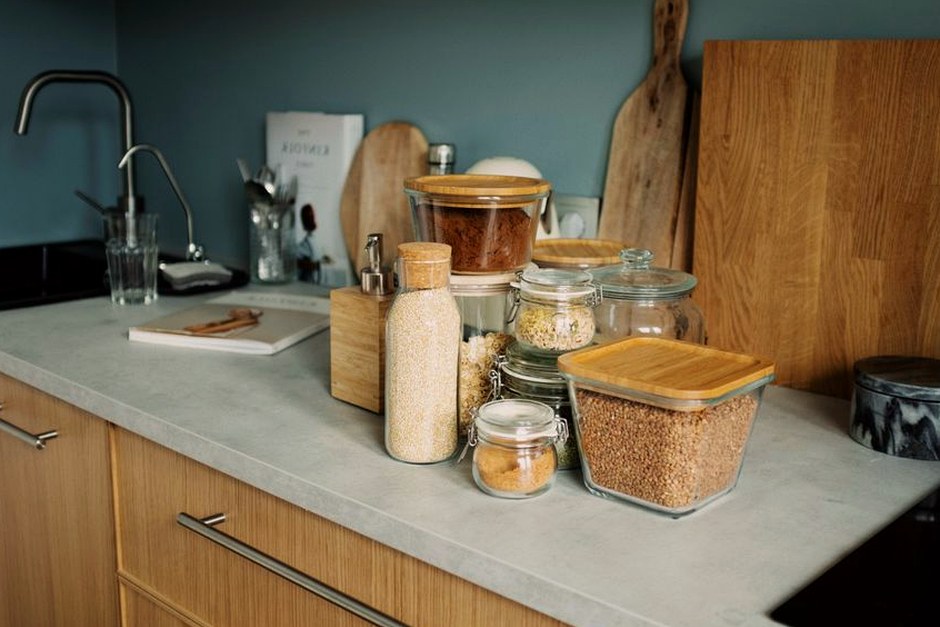
For meals you make often, notice which ingredients regularly interrupt the flow. If you repeatedly cross the room for garlic, vinegar, or grains, that is a clue that their storage place may not match how the kitchen is actually used. Small changes based on real habits usually work better than a total reorganization.
Clean in short gaps instead of at the end
Waiting for water to boil or vegetables to roast creates natural pauses. Use those moments for one quick task: rinse the knife, return three ingredients to the cupboard, wipe a spill, or load the dishwasher. Ten or twenty seconds at a time can prevent a large pile from forming.
A bowl for scraps is useful when the bin is not directly beside the work area. It keeps peels and packaging from spreading across the counter and can be emptied once the chopping stage is finished. Likewise, placing a clean tea towel nearby gives wet hands and small spills an immediate destination.
The best weeknight setup is the one that disappears into habit. After a few meals, the position of the board, knife, oil, and waste bowl should feel almost automatic. The kitchen does not need to look perfectly organized; it only needs to make the next useful action easy to see.